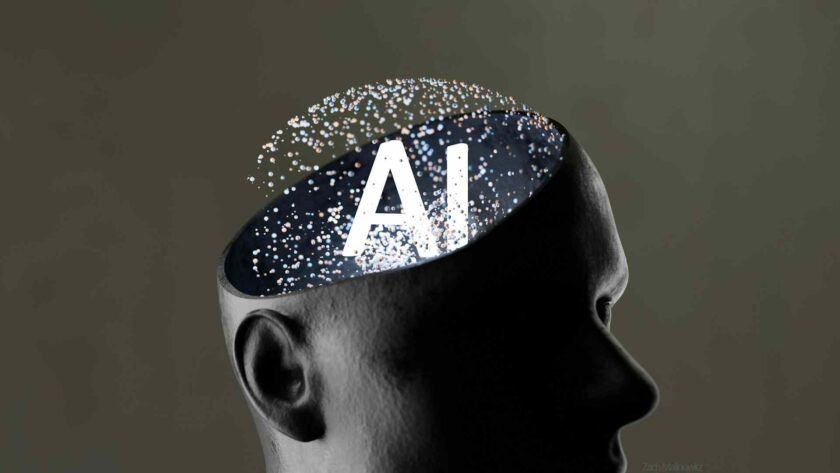
Success with artificial intelligence is not about using every new tool. It comes from choosing the tools that solve the right problems and fit the way your business works.
Artificial intelligence is becoming part of everyday business. Companies use it to write content, answer customer questions, analyze data, automate repetitive tasks, and save time.
Unlike many business technologies, artificial intelligence was adopted quickly. In just a few years, it became part of the daily work of marketing teams, finance departments, software companies, and customer support teams. Businesses that once saw AI as something to watch are now using it to write proposals, analyze data, summarize meetings, answer customer questions, and automate repetitive tasks.
The pace of adoption has been extraordinary.
Yet the rapid growth of AI has created an unexpected problem.
Many businesses have already decided to use artificial intelligence. The real question now is which tools are worth using and where they can have the biggest impact.
That isn’t an easy decision.
Today, almost every software company includes artificial intelligence in its products. Email platforms help users write messages, CRM systems identify sales opportunities, project management tools generate meeting summaries, accounting software analyzes financial data, and even note-taking apps include AI assistants. As AI becomes a standard feature, businesses face a different challenge: deciding which tools genuinely improve the way they work.
For businesses, the challenge is no longer finding AI tools. It is figuring out which ones genuinely help and which ones are mostly marketing.
Using more AI tools does not always lead to better results. The businesses that benefit the most choose a small number of tools that fit the way they work.
They choose tools based on what their business actually needs.
Instead of asking, “Which AI tool is the smartest?” they ask, “Which tool will actually help us do our work better?”
Which tasks are taking up too much of our time?
That shift in thinking changes everything.
Successful AI adoption rarely begins with technology.
It starts by finding the tasks that take up too much time without adding much value to the business.
For one business, that might mean reviewing hundreds of customer support tickets every day.
For another, it may be analysing contracts before they’re signed.
A marketing agency may spend dozens of hours producing campaign ideas and preparing client proposals. A software company may want developers spending less time on repetitive coding and more time solving complex technical problems. An accounting firm might need a faster way to review financial data without compromising accuracy.
These businesses may be very different, but they all have the same goal: spending less time on repetitive work and more time on work that matters.
They’re trying to remove repetitive work so people can focus on higher-value decisions.
That’s where artificial intelligence is making its biggest contribution.
The Companies Winning With AI Aren’t Trying to Replace People
One of the biggest misconceptions surrounding artificial intelligence is that its primary purpose is replacing employees.
The reality inside most businesses looks very different.
Marketing teams still develop strategy.
Sales professionals still build relationships.
Lawyers still negotiate contracts.
Accountants still review and interpret financial statements.
Executives still make decisions that shape the future of their organisations.
AI isn’t replacing these responsibilities.
It is reducing the routine work around these tasks.
Instead of spending two hours summarising a report, employees spend twenty minutes reviewing an AI-generated draft.
Instead of manually categorising hundreds of customer enquiries, support teams focus on solving more complex cases.
Instead of spending time writing the same code again and again, developers can focus more on building better features, improving user experiences, and solving complex problems.
Saving a few minutes on one task may not seem significant, but those small improvements can add up over time.
Across an entire organisation, those saved hours can add up to more productive teams and better use of employee time.
Research from McKinsey & Company shows that businesses are using generative AI in areas such as marketing, software development, customer support, and product teams. The purpose is not only to cut costs. Many companies are using AI to save time, improve workflows, and help employees focus on work that requires experience and judgment.
That difference is important because it changes how businesses should think about using AI.
Companies that view AI only as a way to cut jobs often overlook its real value: helping people complete work more efficiently and focus on tasks that require experience, creativity, and decision-making.
The businesses getting the most from artificial intelligence are using it to support their employees, improve their work, and help them focus on tasks that require human skills.
The Biggest AI Mistake Businesses Make Before Choosing a Tool
Every week, new AI platforms appear promising to help businesses work faster, reduce costs, and improve productivity.
Some automate meetings.
Others promise perfect presentations.
Several claim they’ll replace customer support, analyse financial performance, write marketing campaigns, or generate software code.
Faced with so many options, many businesses make the same mistake.
They choose software before identifying the problem they’re trying to solve.
The result is predictable.
Teams experiment with new tools for a few weeks.
Interest fades.
Employees return to familiar workflows.
Another subscription is simply added to the monthly bill.
Technology has never been the hardest part of digital transformation.
Changing how people work has always been the greater challenge.
The businesses achieving the highest return from AI usually begin somewhere much simpler.
They identify repetitive tasks that take up time but do not require much human input.
They measure how much time it consumes.
Then they ask whether artificial intelligence can genuinely improve that process.
Only after answering those questions do they start looking for the right tools.
That approach often leads to fewer AI subscriptions: but significantly better outcomes.
ChatGPT Became the Employee Nobody Planned to Hire
When OpenAI introduced ChatGPT in late 2022, most businesses treated it as an interesting experiment.
Many people first used it for simple experiments, asking questions, testing its abilities, and exploring what it could do.
Marketing teams generated social media captions.
Developers tested whether it could write simple code.
Few predicted that it would become part of everyday business operations.
That changed surprisingly quickly.
Today, ChatGPT is helping businesses prepare client proposals before sales meetings begin.
It summarises lengthy research reports that once required hours of reading.
Human resources teams use it to draft job descriptions and interview questions.
Consultants organise workshop materials, while entrepreneurs brainstorm product ideas, pricing strategies, and marketing campaigns without leaving their desks.
Its greatest strength isn’t writing.
Nor is it coding.
Its greatest strength is versatility.
Unlike software designed for one department, ChatGPT moves comfortably between marketing, finance, operations, human resources, customer support, and executive planning.
A business owner might begin the morning analysing sales figures, spend the afternoon drafting a proposal, and finish the day preparing questions for tomorrow’s client meeting: all within the same platform.
That flexibility explains why ChatGPT has become one of the first AI tools many organisations adopt.
Not because it replaces specialists.
Because it saves time on small tasks people do every day.
Microsoft Copilot Fits Naturally Into the Workplace
Many AI tools only become useful when employees change how they approach their daily work.
Microsoft Copilot takes a different approach by adding AI features directly into the tools employees already use.
Instead of asking businesses to adopt another application, Microsoft Copilot brings AI into Word, Excel, Outlook, PowerPoint, and Teams. Employees can use AI within the software they already work with every day, making it easier to write documents, analyze data, summarize emails, prepare presentations, and organize meetings. Because it fits into familiar tools, businesses can start using AI without changing their entire workflow or asking employees to learn a completely new system.
That makes it easier for employees to start using AI in their daily work.
New technology often fails because people are reluctant to change the way they work. Microsoft Copilot makes that transition easier by bringing AI into the software employees already use every day.
An accountant reviewing hundreds of rows in Excel can identify trends more quickly.
A project manager can summarise a week of Team conversations before a meeting.
An executive preparing a presentation can generate a first draft without starting from a blank slide.
These are not major changes
They are small improvements that save time every day.
On their own, each improvement may seem minor, but across a large organisation, those time savings quickly add up.
The same idea applies beyond Microsoft.
The best business software succeeds because it helps people work better with the tools they already know, not because it forces them to learn a completely new way of working.
Claude Is Quietly Becoming the Choice for Complex Thinking
Every AI model is good at different kinds of tasks.
Some generate creative content.
Others excel at coding.
Claude has earned its reputation for something different.
Reasoning.
Businesses working with lengthy contracts, policy documents, technical manuals, research papers, and detailed reports often need more than quick answers. They need AI that can understand complex documents and keep track of information from beginning to end.
Consultants use Claude to review large client reports, identify key findings, and prepare recommendations more efficiently.
Legal teams use Claude to review complex agreements, compare different versions, and identify important changes.
Researchers use Claude to organize large amounts of information, making it easier to find patterns and insights.
These tasks require careful thinking and accuracy more than quick answers.
That distinction has helped Claude develop a loyal following among professionals whose work depends on accuracy rather than rapid content generation.
Artificial intelligence isn’t becoming more valuable because one model outperforms another.
It’s becoming more useful because different models are evolving to solve different business challenges.
How Perplexity Is Changing the Way Businesses Research
Reliable information has always been valuable.
Finding it has never been easy.
Business leaders often spend hours comparing reports, reviewing industry publications, reading market research, and verifying statistics before making important decisions.
Perplexity approaches research differently.
Instead of simply providing an answer, it shows users the sources behind the information.
That simple difference changes how businesses use AI.
Consultants can validate market trends more efficiently.
Journalists verify information before publication.
Investors compare industries without manually opening dozens of browser tabs.
Executives preparing board presentations can review the supporting sources while gathering the information they need.
Artificial intelligence becomes far more useful when users can examine where the information comes from instead of accepting every response at face value.
Trust remains one of the most important factors in business.
Research tools that help businesses verify information instead of relying on guesswork are becoming increasingly important.
How GitHub Copilot Helps Developers Spend Less Time on Repetitive Work
Writing software involves many repetitive tasks that developers handle every day.
Developers often create similar code, documentation, configuration files, and tests across different projects.
None of these tasks are especially difficult.
They simply consume time.
GitHub Copilot reduces much of that repetition.
Developers describe what they want to build, review AI-generated suggestions, and adapt the output to meet project requirements.
The software does not replace experienced engineers.
Instead, it reduces the amount of routine work involved in software development.
That difference matters because AI is most valuable when it helps developers work better, not when it tries to replace them.
Businesses don’t hire developers because they can type code quickly.
They hire them because they can solve difficult technical problems.
Every hour saved on routine coding gives developers more time to focus on architecture, performance improvements, and building better products.
How Notion AI Helps Businesses Organize and Use Their Knowledge Better
As companies grow, the amount of information they create increases, making it harder for teams to organize, find, and use what they need.
Meeting notes often get buried in long email threads.
Important procedures often remain known only by the people who created them.
Project information is often stored in different places, making it harder for teams to find what they need.
Eventually, employees spend more time searching for information than using it.
Notion AI addresses a problem many businesses overlook.
Organising knowledge.
Instead of treating documentation as a collection of pages that people rarely revisit, artificial intelligence makes information searchable, summarises lengthy documents, drafts meeting notes, and helps teams retrieve knowledge using natural language.
For companies with teams working across different locations, this capability has become increasingly valuable.
Knowledge should become easier to access as a company grows.
Too often, the opposite happens.
The Companies Seeing Results Aren’t Using the Most AI Tools
One common belief continues to influence how businesses approach AI.
If artificial intelligence improves productivity, then adding more AI tools should improve productivity even further.
Reality tells a different story.
Many organisations discover they have added more AI subscriptions than they have improved the way they work.
Marketing uses one platform.
Sales uses another.
Human resources introduces something different.
Customer support experiments with a fourth application.
Eventually, employees spend more time switching between software than completing meaningful work.
Successful businesses avoid that trap.
They choose fewer platforms.
They integrate them carefully.
Most importantly, they make sure every tool solves a specific problem that matters to the business.
Technology should simplify work.
When AI creates unnecessary complexity, it is a sign that the wrong tool or approach has been chosen.
AI Doesn’t Replace Experience
Artificial intelligence can draft reports.
It can analyse data.
It can summarise meetings.
It can write code.
It can answer customer questions.
What it cannot replace is judgement.
An experienced lawyer recognises legal risks that software may overlook.
An accountant understands what financial statements mean for the business.
A sales professional reads body language during negotiations.
A CEO balances long-term strategy against short-term pressure.
Business decisions rarely depend on information alone.
They depend on experience.
The companies achieving the greatest success with AI understand this balance.
They allow software to handle routine work while people continue making decisions that require context, responsibility, and critical thinking.
Technology improves productivity.
It doesn’t replace leadership.
Looking Beyond the Hype
Every generation sees new technologies that promise to change the way businesses operate.
Some disappear almost as quickly as they arrive.
Others change the way businesses operate for years to come.
Artificial intelligence increasingly belongs in the second category.
Not because it replaces people.
Not because it automates every task.
It removes countless hours of routine work that has slowed productivity for decades.
Businesses that benefit most from AI aren’t chasing every new product launch or experimenting with every trending application.
They’re identifying the problems that slow their business down, choosing software that fits the way their teams already work, and measuring the results over time.
That’s a far more disciplined approach than simply buying the latest technology.
The conversation surrounding artificial intelligence has matured.
The question is no longer whether businesses should adopt AI.
It’s whether they can identify where it creates the greatest value.
Companies that answer that question well won’t necessarily own the most advanced technology.
They’ll build organisations that move faster, make better decisions, and adapt more quickly than their competitors.
In business, that advantage has always mattered.
Artificial intelligence simply gives companies another way to achieve it.
References
- McKinsey & Company. The State of AI.
- Microsoft. Microsoft 365 Copilot.
- OpenAI. ChatGPT for Business.
- Anthropic. Claude for Teams.
- GitHub. GitHub Copilot.
- Perplexity AI. Enterprise Search.
- Deloitte. State of Generative AI in the Enterprise.